Showing posts with label Pink. Show all posts

Wednesday, June 26, 2013

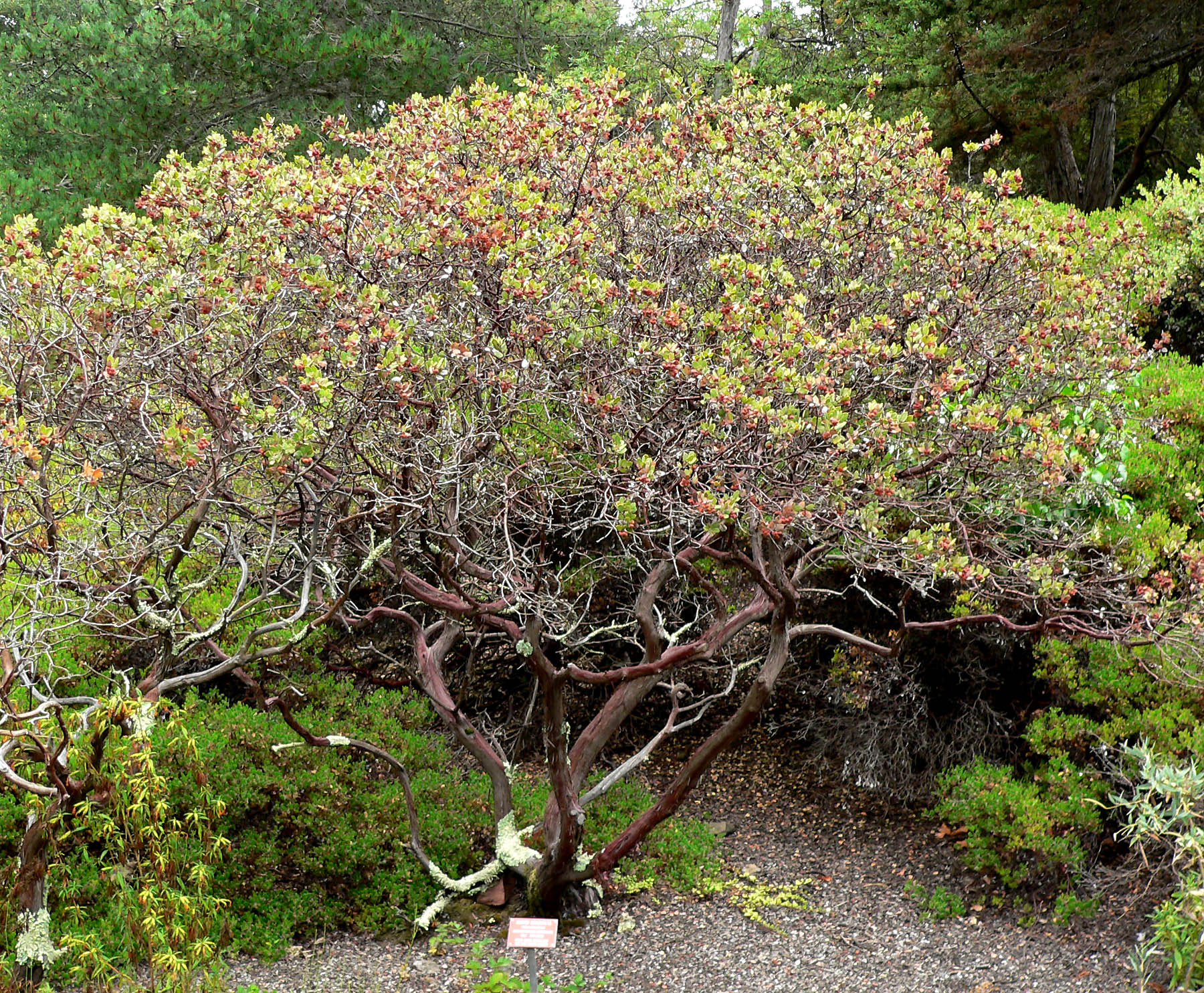
Arctostaphylos uva-ursi (bearberry, kinnikinnik, pinemat manzanita)

Family: Heath

Characteristics
Small, woody groundcover shrub 5-30 cm high. Evergreen leaves that are shiny, small, and feel thick, leathery and stiff. Alternately arranged on the stems. Undersides of leaves are lighter green than on the tops. New stems can be red if plant is in full sun, but green in shadier areas. Older stems are brown. White or pink flowers bloom in the spring.

The finely textured velvety branches are initially white to pale green, becoming smooth and red-brown with maturity. 

The dark green leaves are 1 in long and have rounded tips tapering back to the base. In fall, the leaves begin changing from a dark green to a reddish-green to purple.

Terminal clusters of small urn-shaped flowers bloom from May to June. They bear round, fleshy or mealy, bright red to pink fruits called drupes. The smooth, glossy-skinned fruit will frange from 1/4 to 1/2 in in diameter.

Area
Chaparral. Cool places.

Other
Used medicinally for its antimicrobial properties and acts as a mild diuretic. It has been used for urinary tract complaints. An infusion may be made by soaking the leaves in ethanol and then diluting with water.

Used in many traditional North American Native smoking mixes known collectively as kinnikinnick. 
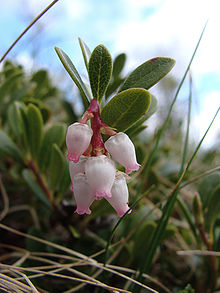

Arctostaphylos (manzanita)

Family: Heath

Characteristics
They are shrubs or small trees. There are about 60 species of Arctostaphylos, ranging from ground-hugging arctic, coastal, and mountain species to small trees up to 20 ft tall. Most are evergreen, with small oval leaves 1-7 cm long, arranged spirally on the stems. The flowers are bell-shaped, white or pale pink, and borne in small clusters of 2-20 together. They flower in the spring. The fruit are small berries, ripening in the summer or autumn. The berries of some species are edible.

Area
Chaparral


Armeria maritima californica (thrift, sea thrift, sea pink)

Family: Leadwort

Characteristics
Perennial which grows in low clumps and sends up long stems from which globes of bright pink flowers blossom. In some cases purple, white, or red flowers also occur. Basal mound of tough grass-like leaves. Blooms from late spring through summer.

Area
Coastal bluffs, dunes, beaches, edges of salt marshes.


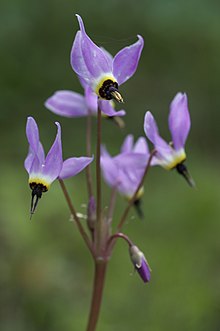
Dodecatheon hendersonii (shooting stars, broad-leaved shooting stars, Henderson's shooting stars, sailor caps, mosquito bells)

Family: Primrose

Characteristics
A summer deciduous with basal leaves and nodding flowers on stems 10-30 cm tall. The flowers are magenta to deep lavender to white, with the stamens thrust out and the sepals bent back.

Area
Needs good drainage and dry summer period to grow. Moist grassy places in brush or open woods. 

Other
One of the first flowers to bloom. Late January to February. Roots and leaves edible when roasted or boiled. Poisonous if consumed raw.


Tuesday, June 25, 2013

Polygonum coccineum (smartweed, water smartweed)

Family: Buckwheat

Characteristics
Perennial with narrow spikes of pink flowers. Joints of leafy stems are swollen, and at each join is a thin membrane that looks like a short twist of brown tissue paper.

Area
Ponds, ditches, lagoons.


Polygonum bistortoides (Western knotweed, American bistort, western bistort, smokeweed or mountain meadow knotweed)

Family: Buckwheat

Characteristics
From 12 in to 1.5 ft tall. Leathery leaves, basal on the stem. Inflorescence densely packed with small white to pinkish flowers.

Area
Meadows on edge of lagoons or marshes. Boggy stream banks.

Uses
Edible roots and seeds.


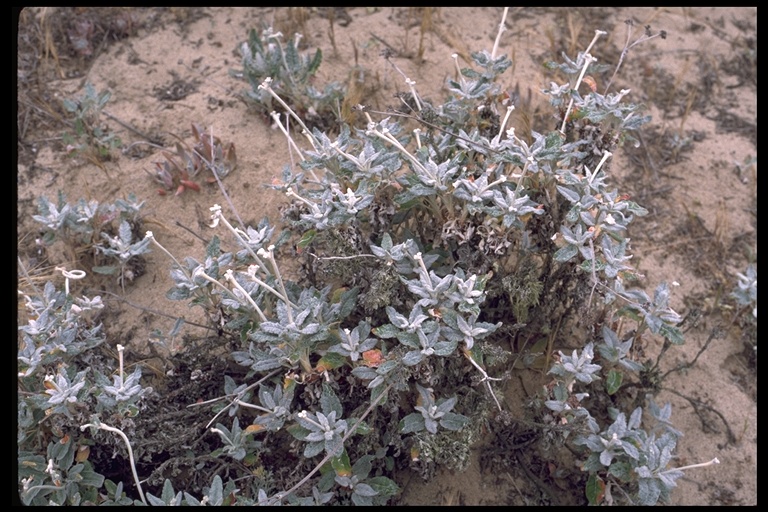
Eriogonum latifolium (coast buckwheat)

Family: Buckwheat

Characteristics
Perennial buckwheat with woody roots. Full heads of white or pink-tinged flowers. Basal clusters of wavy-margined leaves densely felted with white hairs (primarily on underside). Blooms in summer.

Area
Adverse conditions. Thin soil, rocks and cliffs. Coastal bluffs.


Montia sibirica (Siberian montia, Siberian spring beauty, Siberian miner's lettuce, candy flower, pink purslane)

Family: Purslane

Characteristics
Succulent leaves similar to miner's lettuce but stem leaves not fused together. Basa leaves pointed and taper to a long slender stalk. Pinkish or white flowers with deeper pink pencilling.

Area
Moist places: wet ditches, swamps, lagoon and stream edges.


Thursday, June 20, 2013

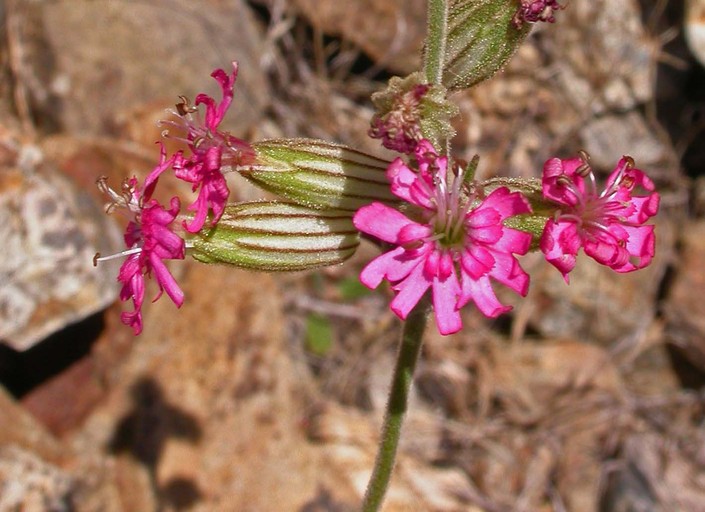
Silene scouleri grandis (campion, coastal catchfly)

Description
Pink Family. Cleft petals stand at right angles to the sticky calyx. Tall, almost velvety stems grow up to 2.5 ft.

Location
Ocean bluffs.

Cakile edentula californica (sea rocket)


Color: White. Pink.

Description: Similar to sea-rocket (Cakile maritima). Inconspicuous next to C. maritima.

Location: Sandy beaches at the edge of high tide. 

Cakile maritima (sea-rocket)


Color: Pink.

Description: Mustard Family. Annual. Succulent lobed leaves. Massed mounds 1 ft. high.

Location: Sandy beaches at the edge of high tide.

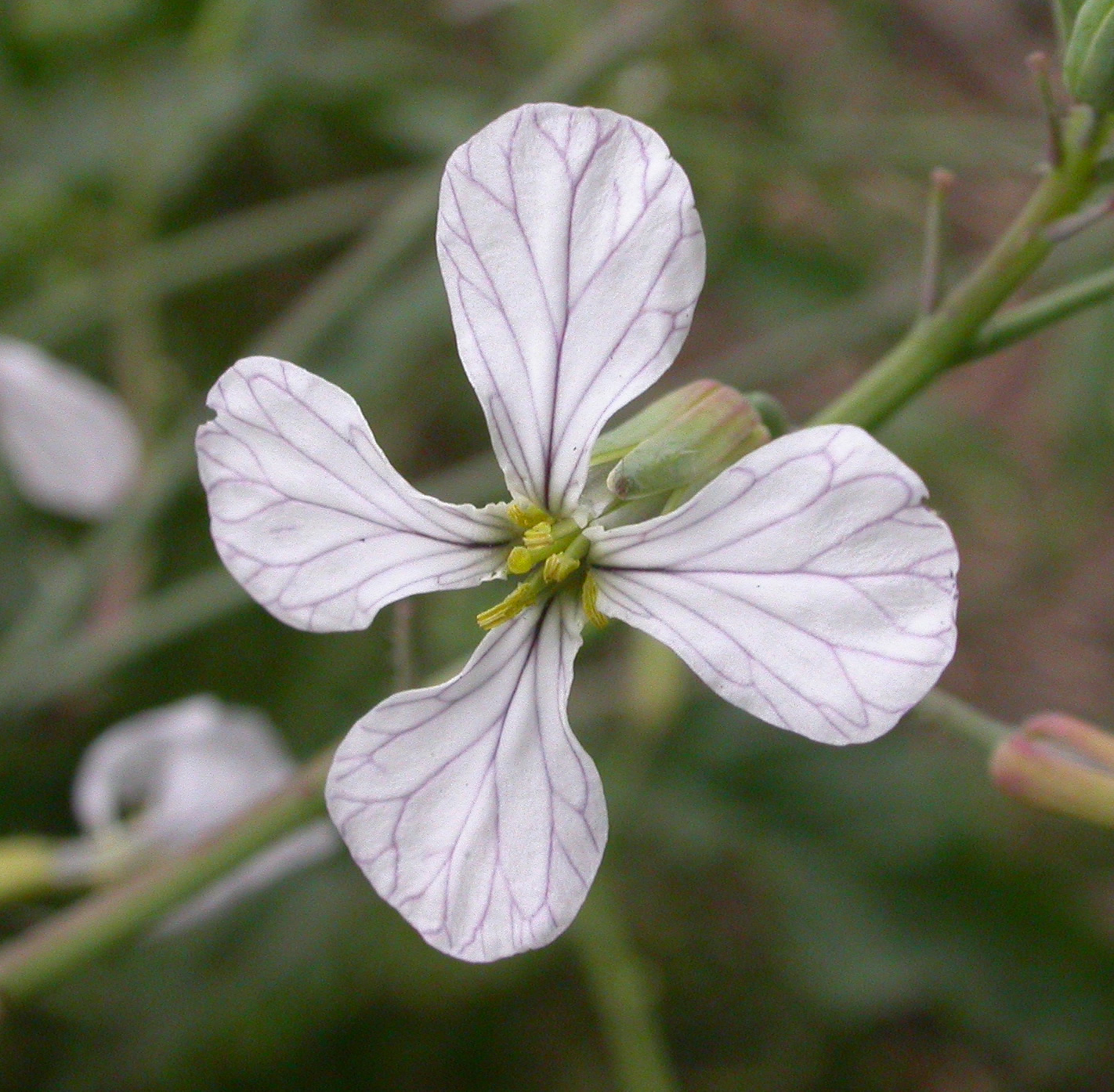
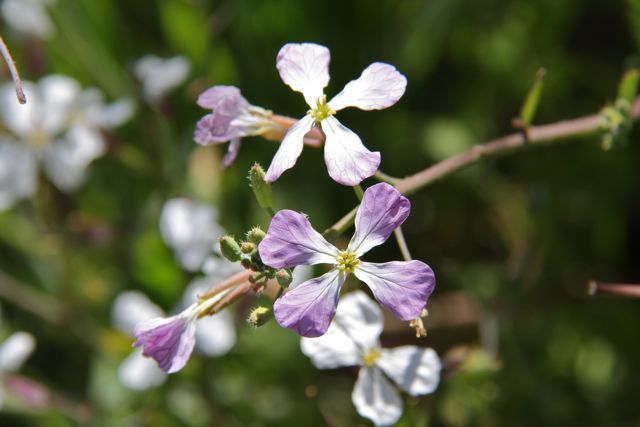
Raphanus sativus (wild radish)


Color: White. Cream. Pale yellow. Pink. Faded purple.

Description: Mustard Family. Annual. Grows as high as 3 ft. Much branched and loaded with blossoms. Each petal with dark purple veins. Pods do not split open and are slightly constricted between the seeds. 

Location: Roadsides, pastures, vacant lots. Pt. Reyes. 

Other: Ancestor of cultivated radish.


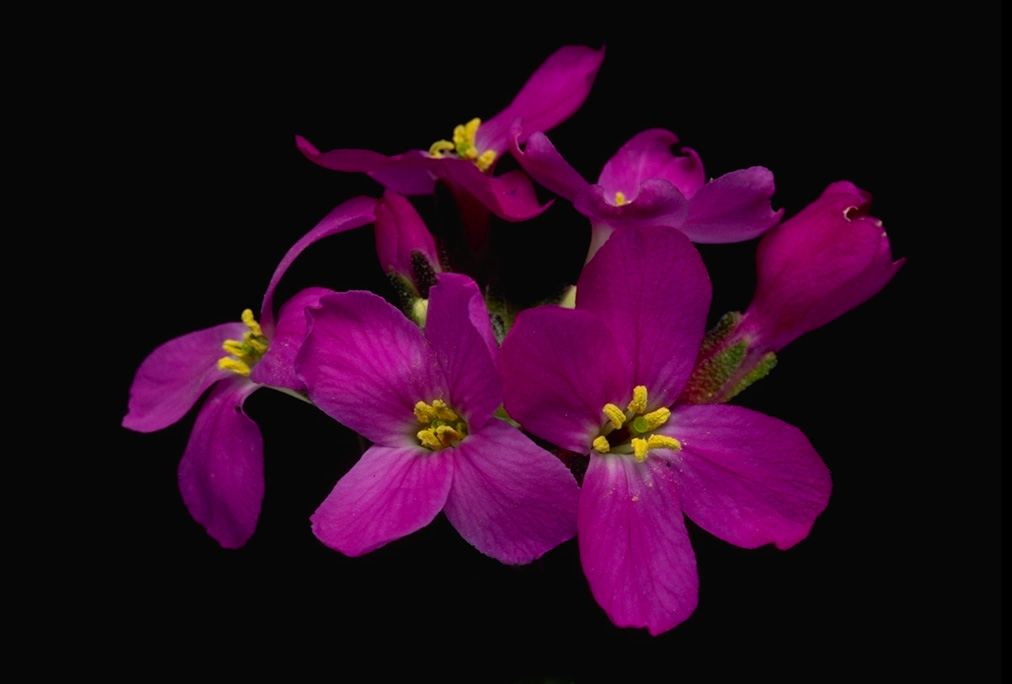
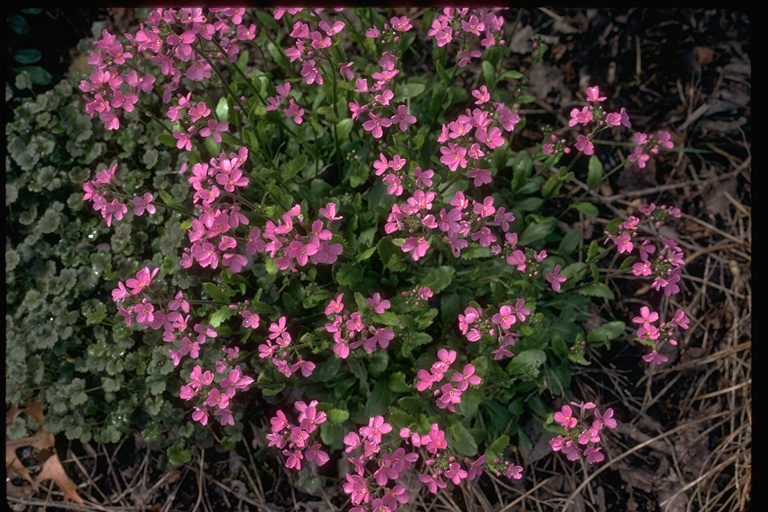
Arabis blepharophylla (rock-cress)


Color: Pink. Purple.

Description: Mustard Family. Perennial with hairy green leaves. Between 1/2 - 1 foot high.

Time: February.

Location: Grows in thin soil of bluffs and headlands. From Sonoma to Monterey. Pt. Reyes.