Characteristics
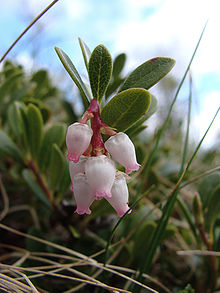
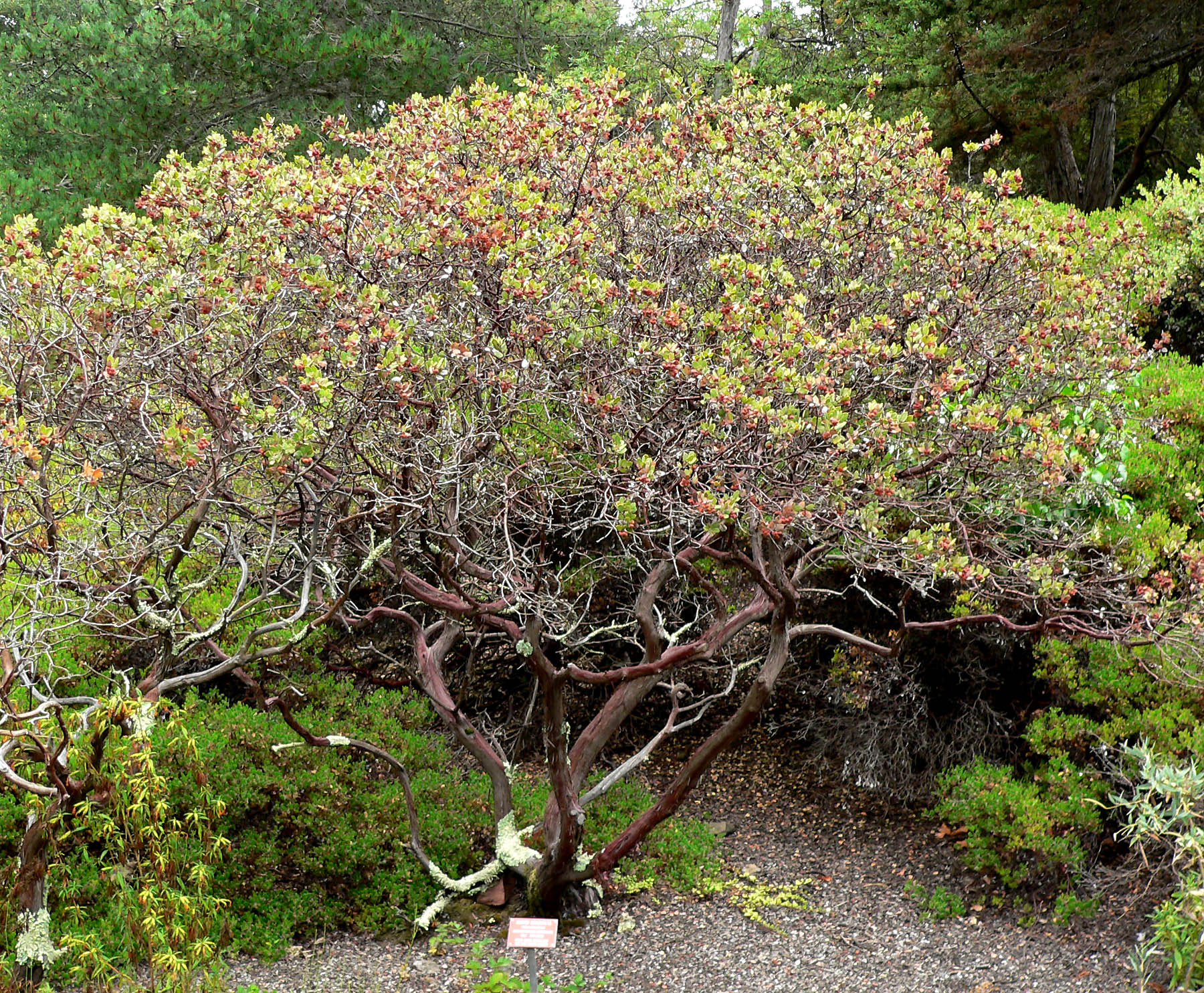
Small, woody groundcover shrub 5-30 cm high. Evergreen leaves that are shiny, small, and feel thick, leathery and stiff. Alternately arranged on the stems. Undersides of leaves are lighter green than on the tops. New stems can be red if plant is in full sun, but green in shadier areas. Older stems are brown. White or pink flowers bloom in the spring.
The finely textured velvety branches are initially white to pale green, becoming smooth and red-brown with maturity.
The dark green leaves are 1 in long and have rounded tips tapering back to the base. In fall, the leaves begin changing from a dark green to a reddish-green to purple.
Terminal clusters of small urn-shaped flowers bloom from May to June. They bear round, fleshy or mealy, bright red to pink fruits called drupes. The smooth, glossy-skinned fruit will frange from 1/4 to 1/2 in in diameter.
Area
Chaparral. Cool places.
Other
Used medicinally for its antimicrobial properties and acts as a mild diuretic. It has been used for urinary tract complaints. An infusion may be made by soaking the leaves in ethanol and then diluting with water.
Used in many traditional North American Native smoking mixes known collectively as kinnikinnick.