Showing posts with label Edible. Show all posts

Wednesday, June 26, 2013

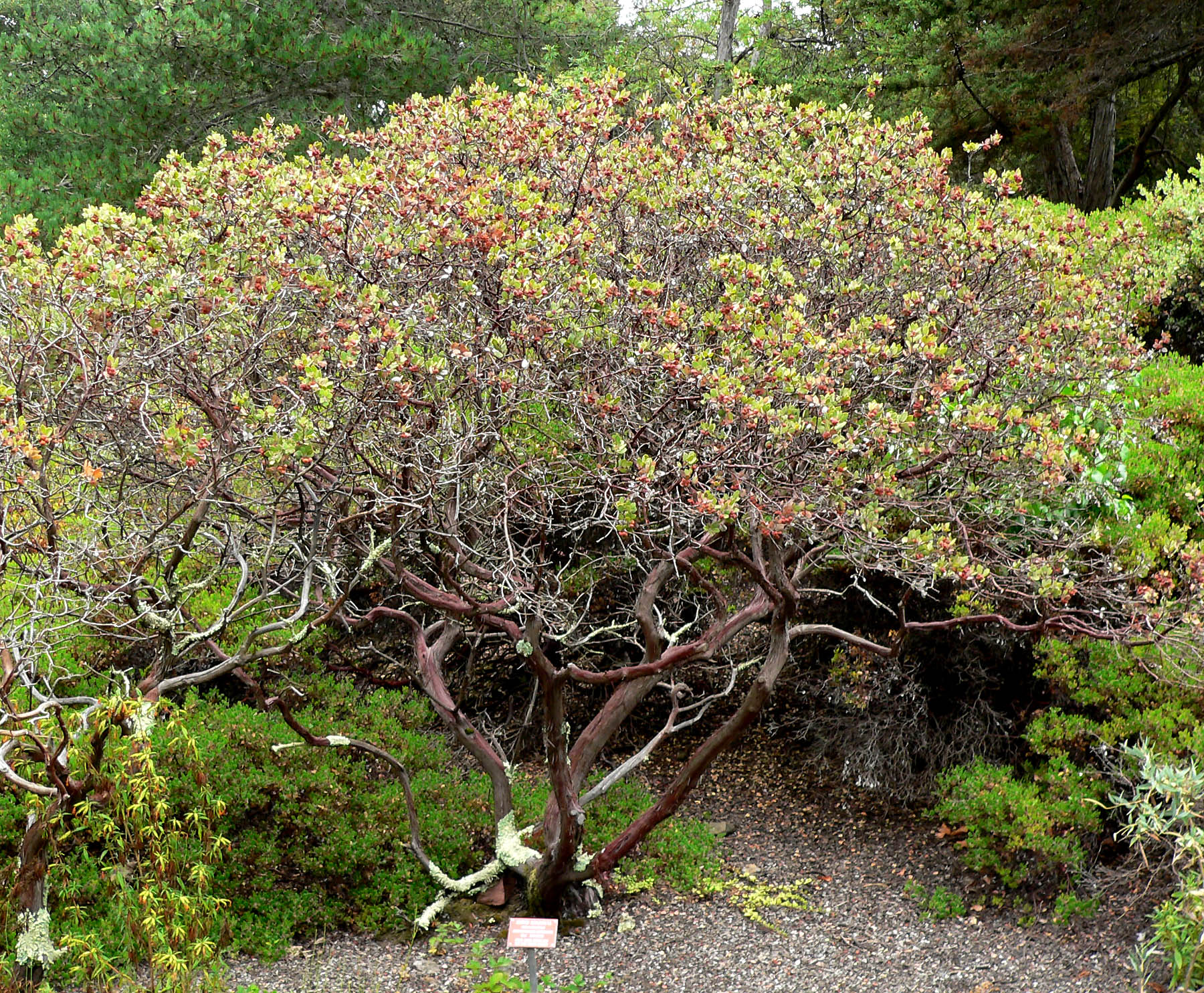
Arctostaphylos (manzanita)

Family: Heath

Characteristics
They are shrubs or small trees. There are about 60 species of Arctostaphylos, ranging from ground-hugging arctic, coastal, and mountain species to small trees up to 20 ft tall. Most are evergreen, with small oval leaves 1-7 cm long, arranged spirally on the stems. The flowers are bell-shaped, white or pale pink, and borne in small clusters of 2-20 together. They flower in the spring. The fruit are small berries, ripening in the summer or autumn. The berries of some species are edible.

Area
Chaparral


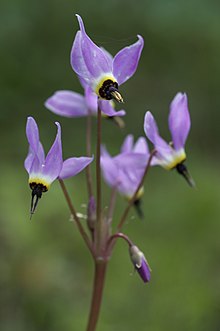
Dodecatheon hendersonii (shooting stars, broad-leaved shooting stars, Henderson's shooting stars, sailor caps, mosquito bells)

Family: Primrose

Characteristics
A summer deciduous with basal leaves and nodding flowers on stems 10-30 cm tall. The flowers are magenta to deep lavender to white, with the stamens thrust out and the sepals bent back.

Area
Needs good drainage and dry summer period to grow. Moist grassy places in brush or open woods. 

Other
One of the first flowers to bloom. Late January to February. Roots and leaves edible when roasted or boiled. Poisonous if consumed raw.


Tuesday, June 25, 2013

Abronia latifolia (coastal or yellow sand-verbena)

Family: Four o'clock

Characteristics
Perennial with fragrant yellow flowers in bloom except in the coldest months. Flowers have no petals. Sticky foliage usually sprinkled with sand. Bears a small, winged fruit. Grows in succulent mats.

Area
Sandy beaches. 

Other
Edible roots.


Salicornia virginica (common pickleweed, American glasswort, samphire)

Family: Goosefoot

Characteristics
Perennial with fat-jointed stems. Turns greenish-purple or deep rose in winter.

Area
Salt marshes and alkaline flats.

Other
Edible


Polygonum bistortoides (Western knotweed, American bistort, western bistort, smokeweed or mountain meadow knotweed)

Family: Buckwheat

Characteristics
From 12 in to 1.5 ft tall. Leathery leaves, basal on the stem. Inflorescence densely packed with small white to pinkish flowers.

Area
Meadows on edge of lagoons or marshes. Boggy stream banks.

Uses
Edible roots and seeds.


Friday, June 21, 2013

Montia / Claytonia perfoliata (miner's lettuce, winter purslane, Indian lettuce)

Family: Purslane

Characteristics
A trailing plant, with a long petiole (exceptionally up to 20 cm long).
The small pink or white flowers have five petals 2–6 mm long; they appear from February to May or June, and are grouped 5–40 together above a pair of leaves that are united together around the stem to appear as one circular leaf. 
It is common in the spring. As the days get hotter, the leaves turn a deep red color as they dry out.

Area
Prefers cool, damp conditions. Appears in sunlit areas after the first heavy rains. Found in shaded areas by summer. 

Uses
The common name of miner's lettuce refers to its use by California Gold Rush miners who ate it to get their vitamin C to prevent scurvy. It can be eaten as a leaf vegetable. Most commonly it is eaten raw in salads, but it is not quite as delicate as other lettuce. Sometimes it is boiled like spinach, which it resembles in taste.

Thursday, June 20, 2013

Malva nicaeensis (mallow, cheeses)


Color: White and faded purple. 
Description: Annual. Flowers on short stalks at bases of long-stalked leaves. Circular, flattened fruit, each marked off in segments.
When: Year-round
Where: Pastures, farmyards. 
Other: Edible fruits.