Showing posts with label Pt. Reyes. Show all posts

Thursday, June 20, 2013

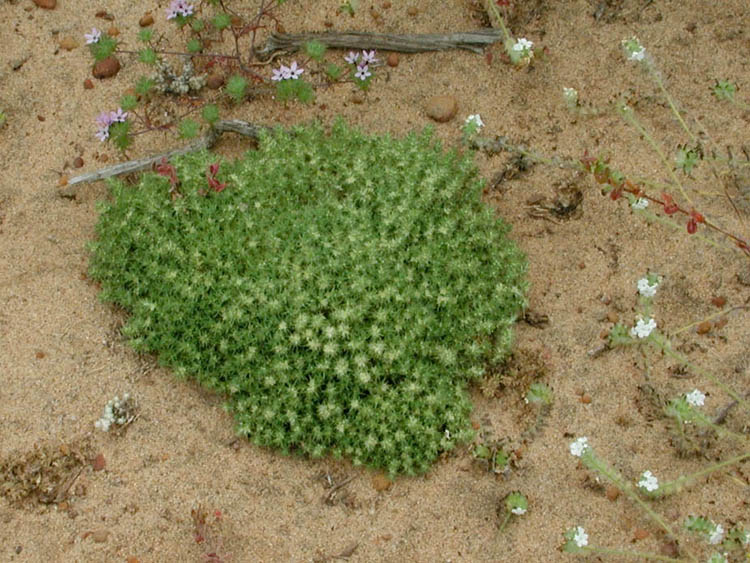
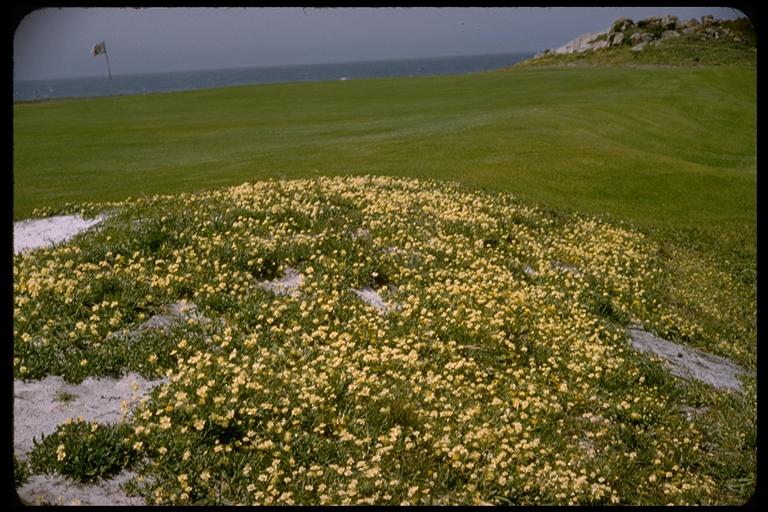
Cardionema ramosissimum (cardionema, sandcarpet)

Description
Pink Family. 
A flat or clumping mat-forming perennial plant which grows along the coastline. From a taproot it extends many petite to sprawling stems up to 30 cm long and covered in very tiny leaves, which are about 1 cm long and needlelike. Filling in the spaces between the spine-shaped leaves are long stipules. The plant bears tiny woolly flowers.

Location
Beach.


Cerastium arvense (field chickweed)

Description
Pink Family. Perennial herb between 30 - 45 cm tall. Can be a clump or a creeper. Hairy stems. Leaves are linear, lance-shaped, or oblong. The inflorescence may consist of a single flower or a dense cluster. Flower has 5 white petals, each with two lobes, and 5 hairy green sepals at the base. Fruit is a capsule with ten tiny teeth at the tip and contains several brown seeds. 


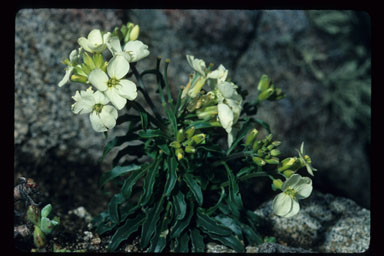
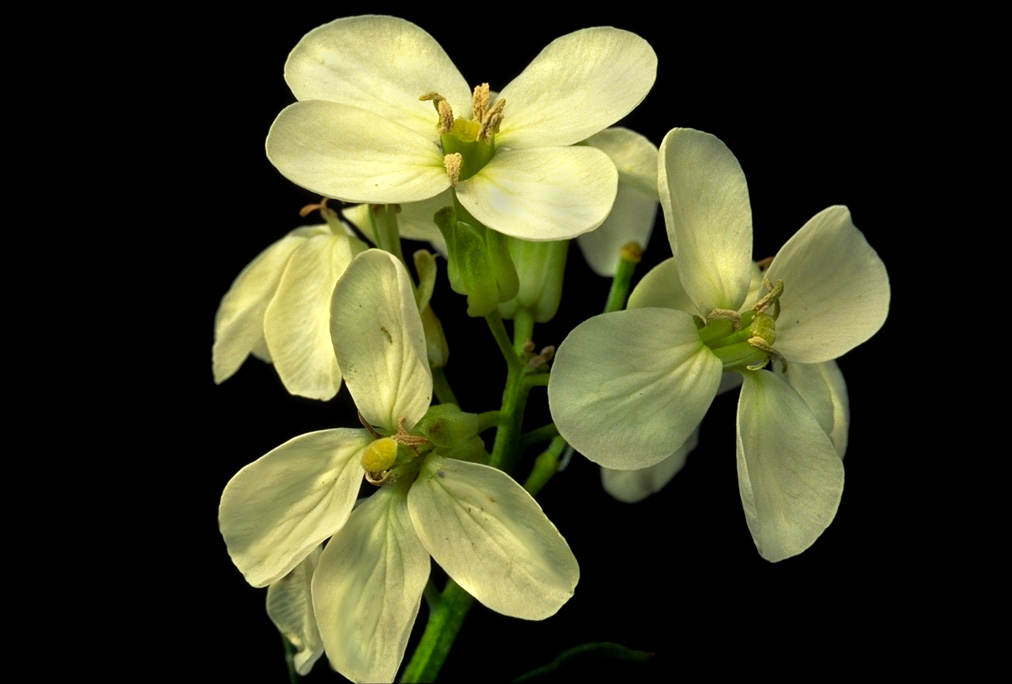
Erysimum concinnum (wallflower)


Color: White. Cream.

Description: Blunt straight pods angle upward or radiate about the upper stem like spokes of a wheel.

Time: Blooms February through April.

Location: Coastal sand.


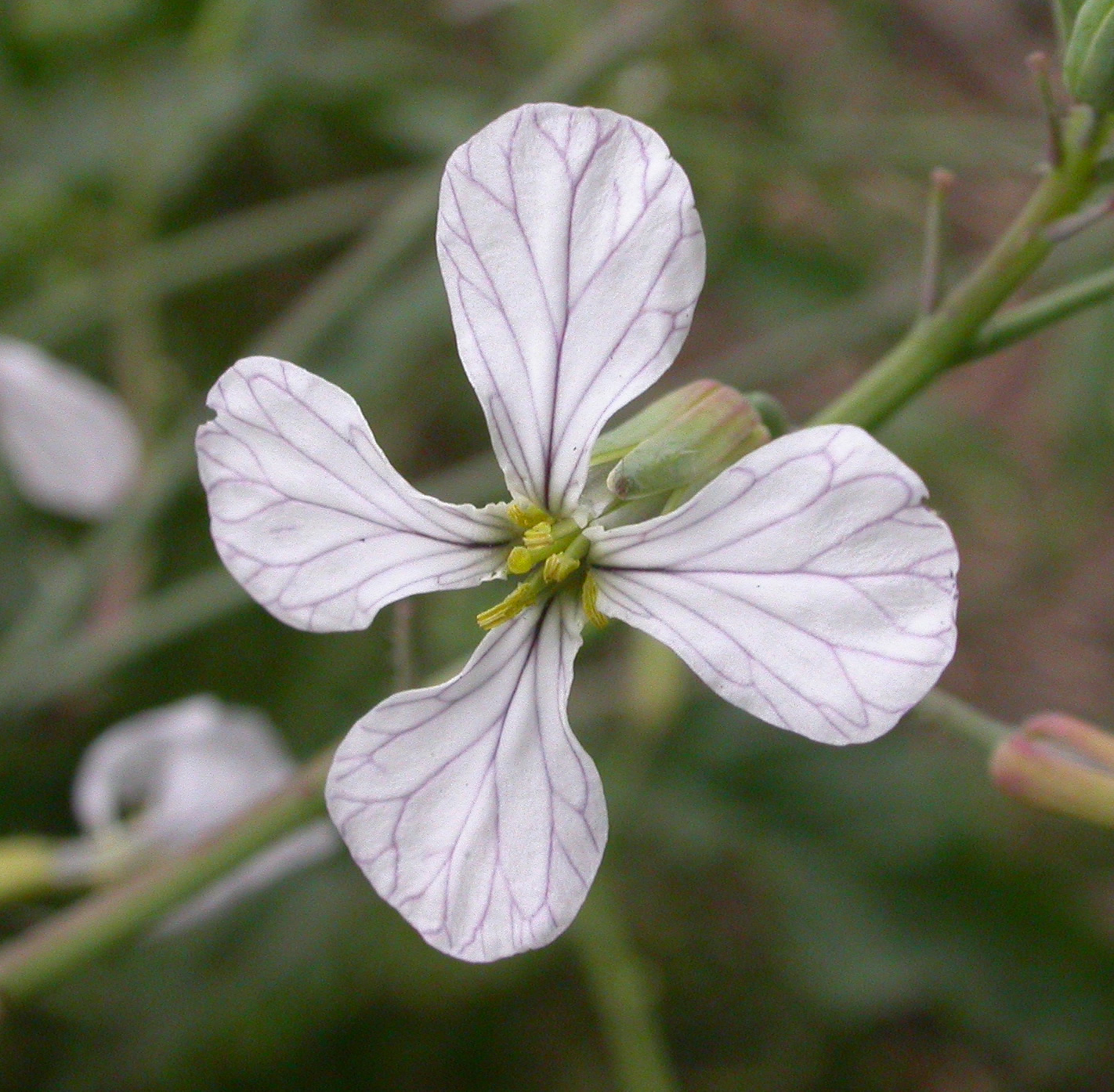
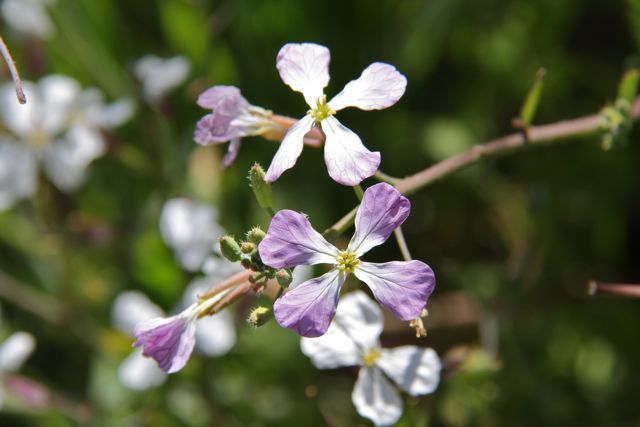
Raphanus sativus (wild radish)


Color: White. Cream. Pale yellow. Pink. Faded purple.

Description: Mustard Family. Annual. Grows as high as 3 ft. Much branched and loaded with blossoms. Each petal with dark purple veins. Pods do not split open and are slightly constricted between the seeds. 

Location: Roadsides, pastures, vacant lots. Pt. Reyes. 

Other: Ancestor of cultivated radish.


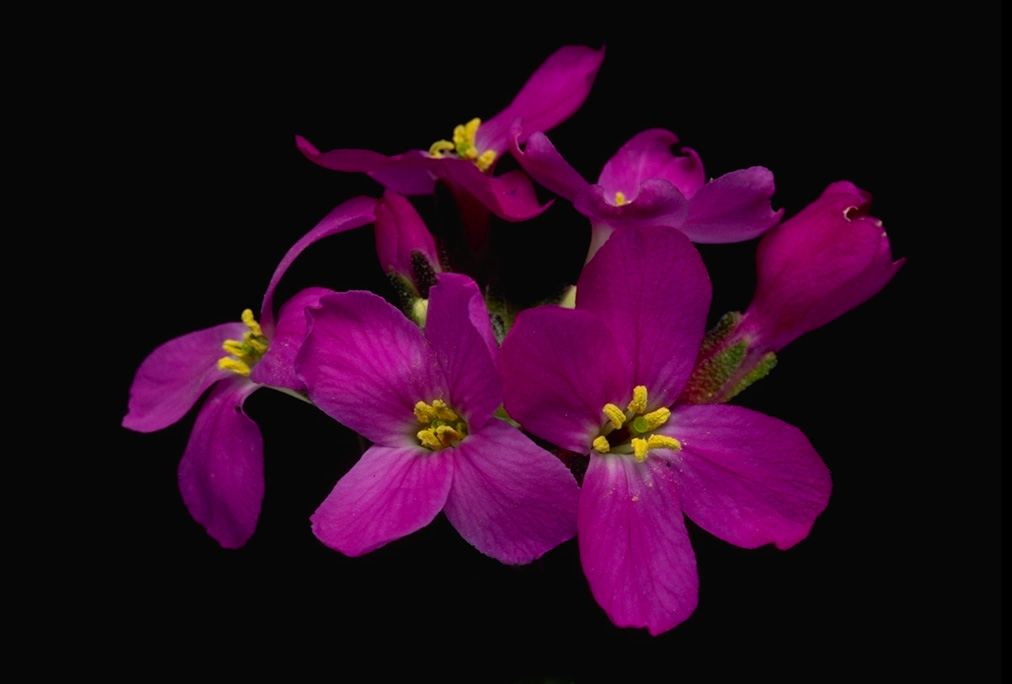
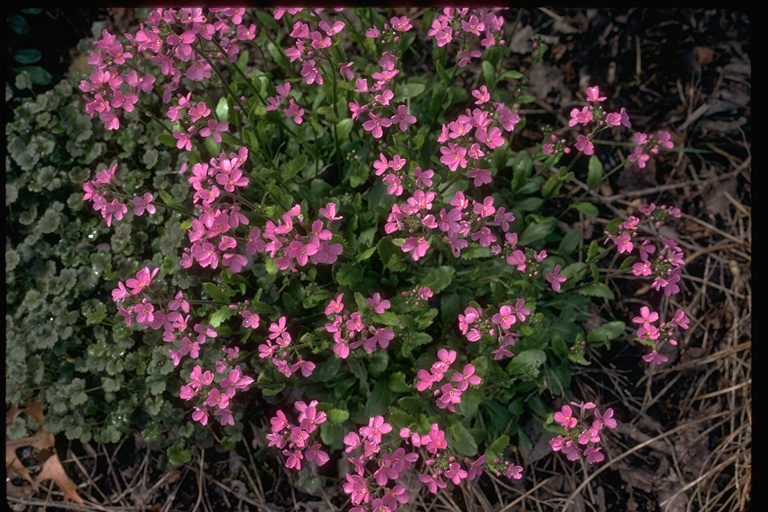
Arabis blepharophylla (rock-cress)


Color: Pink. Purple.

Description: Mustard Family. Perennial with hairy green leaves. Between 1/2 - 1 foot high.

Time: February.

Location: Grows in thin soil of bluffs and headlands. From Sonoma to Monterey. Pt. Reyes.


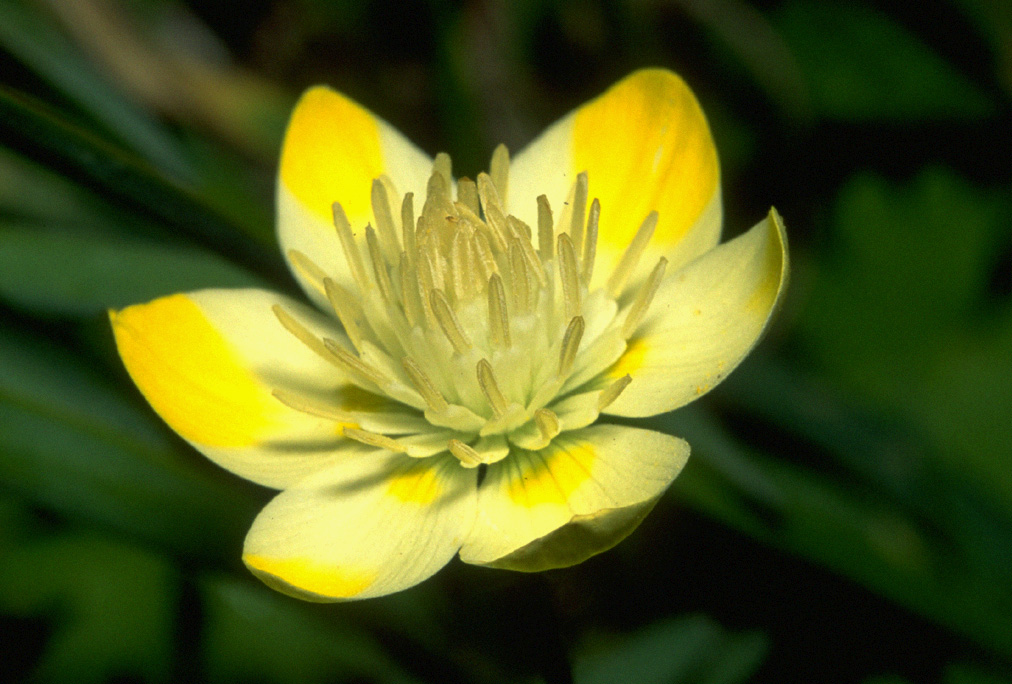
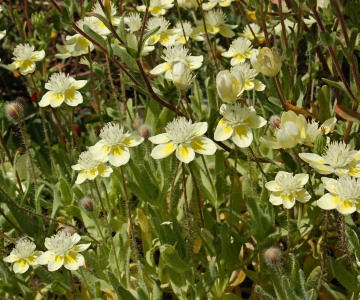
Platystemon californicus (cream cup)


Color: Cream and yellow.

Description: Poppy Family. Annual with dull green foliage of straplike leaves. Stems and flower buds with spreading white hair. Cream petals shaded to a light yellow at the central mass of stamens.

Location: Sunny places. Old pastures. Grassy headlands. Pt. Reyes.


Malva nicaeensis (mallow, cheeses)


Color: White and faded purple. 
Description: Annual. Flowers on short stalks at bases of long-stalked leaves. Circular, flattened fruit, each marked off in segments.
When: Year-round
Where: Pastures, farmyards. 
Other: Edible fruits.

Delphinium decorum (coast blue larkspur, coastal larkspur, yellowtinge larkspur)

Description 
Buttercup Family. Erect, hairy stem 1/2 m in height. Narrow-lobed leaves usually at base of plant. Spindly stem bears 2 - 20 widely spaced flowers. 

Location
Slopes of coastal range from Mendocino to Santa Cruz Counties. Scattered in coastal scrub or on open grassy slopes.

Other
Poisonous to cattle. 

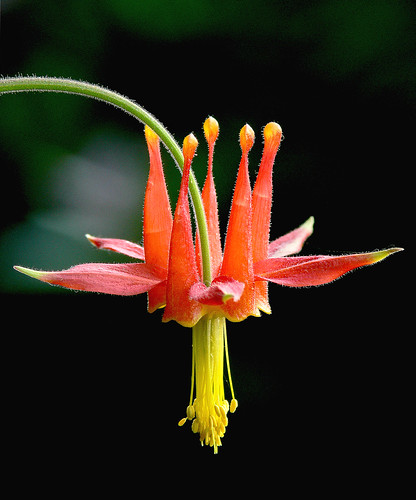
Aquilegia formosa truncata (crimson columbine, western columbine)


Description
Buttercup Family. 20 - 80 cm high. Blooms from April to August. Red sepals and yellow petals.

Location 
Prefers moist locations. Chaparral, forests, stream banks.

Other 
Flowers supposedly edible. All other parts of plant, including seeds and roots, contains cyanogenic glycosides which, if ingested, can cause severe gastroenteritis and heart palpitations. Poisonous if eaten as food. (Wikipedia)

Native American Usage
Hanaksiala and Yurok: Flowers sucked by children for the sweet nectar.
Miwok: Early spring greens boiled and eaten.
(Moerman, Daniel E. Native American Food Plants.)